


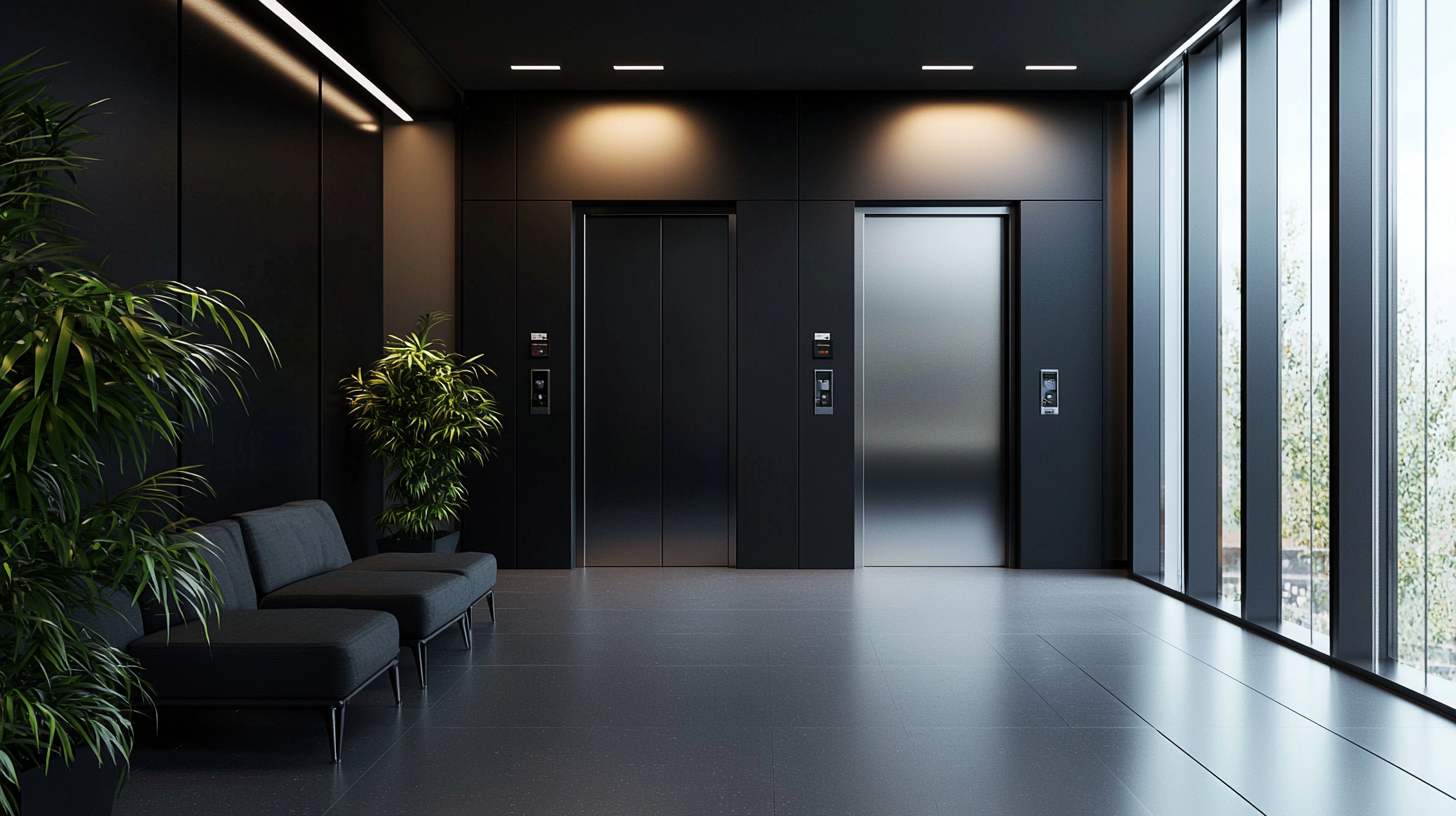
Lifts for residential buildings: how to choose a reliable solution for residents and developers
Lifts for residential buildings are passenger lift solutions designed for the safe daily movement of residents, visitors and service personnel throughout a building.
For a residential development, a lift is more than just a piece of engineering equipment – it is part of residents’ everyday comfort. It needs to operate reliably in the morning and evening, at weekends, during moves, deliveries, building maintenance and when transporting people with different mobility needs.
What types of lifts are used in residential buildings
Passenger lifts are the most common solution for residential properties. They are selected according to the building architecture, passenger traffic calculations and the technical configuration of the equipment. In multi-storey residential buildings, it is important to consider not only the number of floors but also the actual usage scenarios.
| Solution type | Where it is suitable | Key considerations |
|---|---|---|
| Passenger lift | Apartment buildings, residential developments | Comfort, safety, daily traffic |
| Passenger and goods lift | Buildings with dedicated technical space | Service access, equipment layout |
| Lift for people with reduced mobility | Buildings subject to accessibility requirements | Compliance with accessibility requirements, safe movement |
A request to “buy passenger lifts” may sound straightforward, but in practice the solution involves much more than purchasing a standard model. The lift needs to be selected for the specific building, lift shaft, expected load, residents’ requirements and future maintenance needs.
What developers need to consider
For a residential developer, the lift continues to influence the quality of the project even after the apartments have been sold. If the equipment operates unreliably, residents quickly notice it in everyday use. A convenient, quiet and intuitive lift that is regularly maintained helps support the building’s reputation.
Key factors to consider include:
- number of floors and stops;
- expected number of residents;
- lift shaft dimensions;
- rated load;
- availability of a machine room;
- lift cabin design and practicality;
- accessibility for different groups of users;
- maintenance and service after commissioning.
Lifts for residential buildings need to meet not only the technical specification but also the actual rhythm of life in the building. Residents leave for work in the morning, delivery and maintenance services are active during the day, and traffic increases again in the evening as people return home. These factors should be considered before installation rather than after residents move in.
Design, comfort and durability
In a residential building, the lift cabin may be used by hundreds of people every day. It is therefore important to combine aesthetics, durability and ease of maintenance. In comfort-class or business-class residential developments, the lift cabin design can support the overall architectural concept. In large-scale residential projects, practicality, reliability and service are usually the main priorities.
The Euroformat website presents a range of lift cabin designs, including Hoverla, Mont Blanc and Everest. Euroformat treats lift cabin design as part of the overall concept of a construction project, while lift manufacturing is one of the company’s core areas of expertise.
How to choose the right lift for a residential building
The process should begin with a technical specification. The developer or designer needs to collect information about the building, lift shaft, number of floors, expected traffic, accessibility requirements and maintenance needs. Without clearly defined parameters, it can be difficult to compare proposals from different suppliers.
A short checklist:
- Define the building type and project class.
- Check the lift shaft dimensions.
- Estimate the number of residents and expected usage scenarios.
- Agree the requirements for the lift cabin.
- Review documentation and certificates.
- Evaluate the maintenance model after commissioning.
The next step with Euroformat
Euroformat operates as a full-cycle lift manufacturer, covering technical selection, production, installation and ongoing service support. For developers, this means working with a single responsible partner capable of taking into account the building parameters, lift shaft, expected traffic and requirements for future operation.
Explore Euroformat brochures and discover the available lift solutions:
https://euroformat.com/en/brochures/
Frequently asked questions
How do you choose the right lifts for residential buildings?
Start with the technical parameters of the building: the number of floors, lift shaft dimensions, expected number of residents and likely usage scenarios. Then assess the lift type, lift cabin, accessibility, maintenance and documentation. For the most appropriate solution, it is advisable to involve the manufacturer during the design stage.
Why choose Euroformat Lifts?
Euroformat has manufacturing facilities in Kyiv and Europe, experience in the Ukrainian lift market and a comprehensive approach to project delivery. The company provides technical support, catalogues, resources for architects, certificates and service support, all of which are important for residential buildings and property development projects.
Why is maintenance important for a lift in a residential building?
A residential lift operates every day, so maintenance has a direct impact on residents’ comfort and the reliability of the equipment. Regular servicing, access to technical support and a clear maintenance model help reduce the risk of downtime and support safe lift operation.
Conclusion
A lift for a residential building should be selected as a long-term engineering solution rather than as a standalone purchase. Lift shaft dimensions, building height, expected traffic, comfort, design, accessibility and maintenance all need to be considered. Euroformat helps developers select lift equipment for specific residential projects, with a focus on safety, reliable operation and long-term service.