


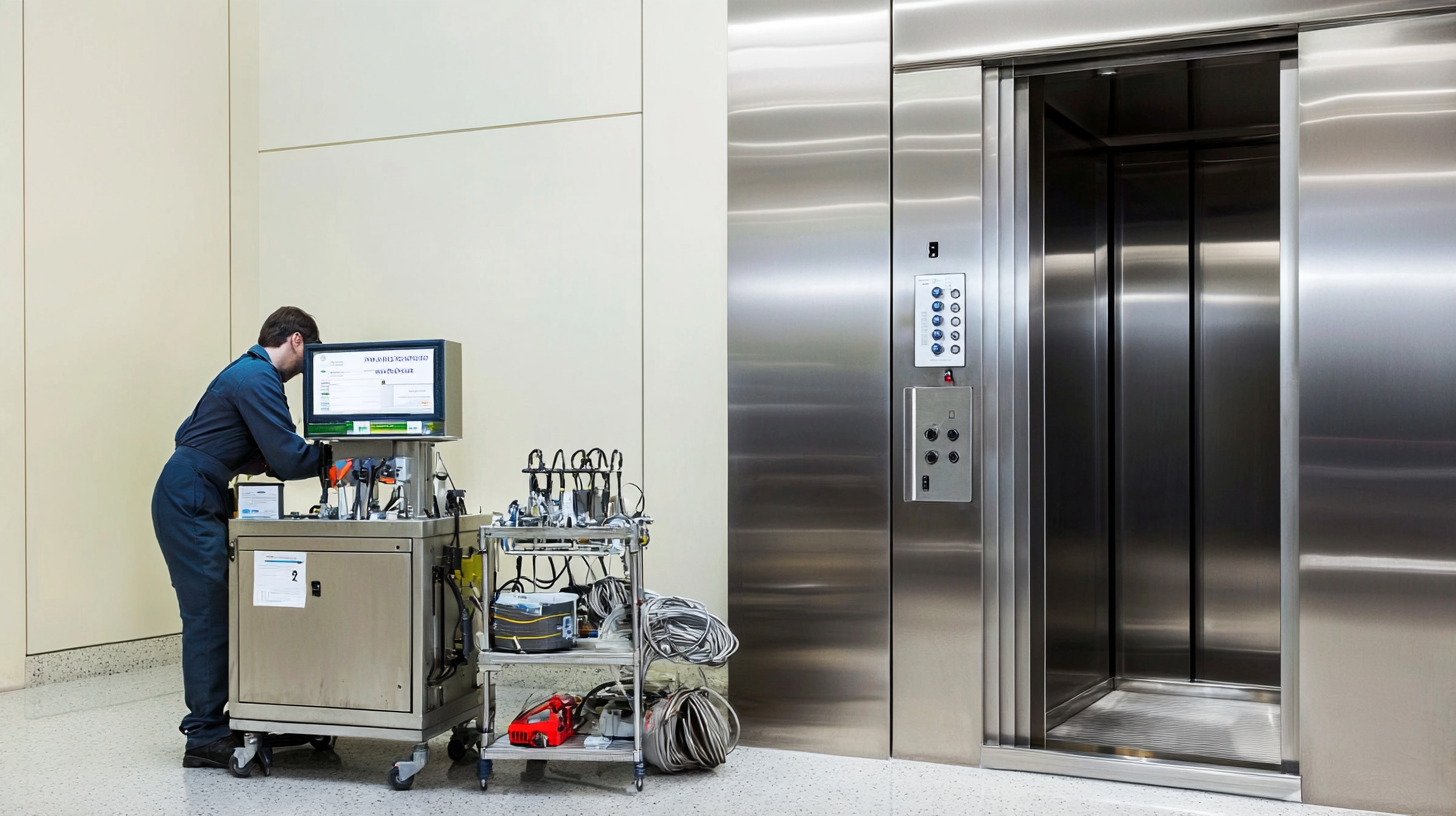
How much does it cost to own a lift: purchase, electricity, repairs, spare parts and maintenance
The total cost of owning a lift includes more than the purchase of the equipment. It also includes installation, electricity, maintenance, repairs, spare parts and the consequences of downtime. This is why lifts should be compared not only by their initial price, but by the full range of future costs.
What is the total cost of ownership?
It is the combined cost associated with a lift from purchase through its subsequent operation. For the customer, this approach gives a more complete picture than comparing commercial proposals only by equipment price. Some future costs can already be assessed when the configuration is being selected.
Initial costs
At the start of the project, the equipment and the work included in the specific proposal should be taken into account. The configuration depends on the parameters of the building, so two prices without a detailed breakdown cannot always be compared directly.
Euroformat selects equipment using the initial project data, making it possible to prepare a proposal for the specific building.
Electricity
Energy consumption forms part of the operating costs. It depends on the specific equipment and its operating pattern, so there is no universal figure for how much electricity a lift consumes.
When comparing solutions, the technical data for the specific configurations should be used.
Maintenance
Lift maintenance is required throughout the operating life of the equipment. The actual scope and cost depend on the specific lift and the maintenance conditions.
Euroformat has a dedicated service and spare parts division covering technical support and equipment diagnostics.
Repairs
The need for repairs depends on the actual technical condition of the equipment, so future repair costs cannot be predicted precisely without knowing the operating conditions.
For the owner, it is important to understand who carries out diagnostics and how technical support is organised. Euroformat provides warranty and post-warranty support.
Spare parts
When assessing long-term costs, it is important to consider whether the necessary components can be sourced for the specific equipment.
Euroformat has a dedicated spare parts supply division supporting reliable lift operation. This allows customers to consider component availability as part of the long-term technical support strategy.
Downtime
A fault creates not only a need for repairs, but also a period during which the lift cannot perform its function. The consequences of downtime depend on the type and purpose of the building.
For this reason, the availability of diagnostics, repairs and required components should also be assessed when selecting a lift.
How operating life affects the economics
The longer the evaluation period, the more important regular and periodic costs become. This is why the question “how much does a lift cost over 10 years?” has no universal answer without information about the equipment and its operating pattern.
A calculation of this kind requires a specific operating scenario.
How to compare different solutions
First, compare configurations against the same technical specification. Then consider maintenance, spare parts support and other operating factors.
Euroformat works with the parameters of the specific project, allowing the customer to assess not an abstract model but a solution selected for the building.
How to prepare a preliminary calculation
Start with the building parameters, required configuration and expected operating pattern. Then separate the initial and future costs and determine which items can already be supported by reliable data.
Euroformat can assist with technical equipment selection, while service and spare parts requirements can also be considered before the final choice is made.
Components of the total cost of ownership
| Cost item | When it occurs | What it depends on |
|---|---|---|
| Purchase | Before installation | Equipment configuration |
| Electricity | During operation | Equipment and operating pattern |
| Maintenance | Regularly | Maintenance conditions |
| Repairs | When required | Technical condition |
| Spare parts | When required | Components needed |
| Downtime | In the event of faults | Nature of the fault and repair process |
How Euroformat helps provide a complete picture
Euroformat looks beyond the equipment price. The company’s specialists help customers assess the lift as a long-term solution: they select the configuration for the specific building, clarify what is included in the price and explain which costs may arise after commissioning.
For developers, this makes it easier to compare proposals on an equivalent basis and reduces the risk of discovering additional costs only after the building has been handed over. For building management companies, it creates a clearer service scenario with fewer unexpected issues.
In this way, Euroformat acts as a partner responsible not only for equipment supply but also for supporting efficient lift operation over the long term.
When to contact the manufacturer
The manufacturer should ideally be involved while different equipment options are still being compared. Euroformat can review the initial project data and select a configuration for the specific building.
This gives the customer a basis for assessing not only the purchase cost but also the future operation of the lift.
Frequently asked questions
What is included in the total cost of a lift?
The total cost may include the purchase of the equipment, the work included in the proposal and subsequent operating costs. After commissioning, there are electricity and maintenance expenses and, when necessary, repairs and spare parts.
The exact scope should be determined for the specific project and evaluation period.
How much does lift maintenance cost?
There is no universal price because it depends on the specific equipment and maintenance conditions. Without this information, quoting a fixed amount would be inaccurate.
The scope and cost of the work should be clarified for the specific lift.
Which costs arise most frequently?
Regular costs are associated with equipment operation and maintenance. Repairs and component replacement arise when required and depend on the actual technical condition.
They should therefore be assessed separately from recurring operating expenses.
Can operating costs be reduced?
The available ways to optimise costs depend on the specific equipment and operating conditions. At the selection stage, it is worth comparing technical solutions, maintenance conditions and spare parts availability.
Potential savings should not be estimated without confirmed data for the specific configuration.
Why can a cheaper lift cost more over 10 years?
A lower initial price does not by itself determine future costs. Over a longer period, electricity, maintenance and, when necessary, repairs and spare parts are added to the purchase cost.
A meaningful conclusion can therefore only be made after comparing the total costs of specific solutions.
Conclusion
The total cost of ownership makes it possible to assess a lift as equipment with a long operating life. The initial price is important, but it does not show all future costs.
Euroformat’s technical selection, service support and spare parts capabilities allow customers to consider these factors while the equipment is still being selected.